Technical Articles
A DOL starter is a simple and widely used motor starting method. It connects a motor directly to the power supply, delivering full voltage, high starting torque, and a high inrush current instantly. This blog explains the DOL starter's working principle, key components, advantages, disadvantages, and applications. It also highlights why DOL starters remain a reliable, cost-effective choice for pumps, compressors, and industrial machinery.
Electric motors do the heavy lifting in any factory, water treatment plant, workshop, or agricultural pumping station. They drive pumps that move water, compressors that power pneumatic systems, and conveyors that keep production lines moving. But here's something interesting. While motors receive most of the attention, the equipment responsible for starting them often sits quietly inside a control panel without anyone noticing.
That's where a DOL starter comes into the picture.
For decades, electrical engineers have relied on this straightforward motor starting method because it offers something industries value: reliability free of unnecessary complexity. No sophisticated programming. No complicated electronics. Just a proven way to start and protect motors. In an era of rapidly advancing automation, the Direct-On-Line starter still retains its stance. There is a reason for that. Sometimes the simplest solution is exactly the right one.
Understanding how it works, where it is used, and what its limitations are can help anyone involved with electrical systems make smarter choices when selecting motor control equipment.
The DOL starter full form is Direct-On-Line Starter.
The name sounds technical, but the idea behind it is remarkably simple. When the motor receives a start command, the starter connects it directly to the incoming power supply. There is no gradual voltage increase and no reduction in starting voltage. The motor gets full line voltage immediately.
That direct connection is what gives the starter its name. Think about a borewell pump installed on a farm. The moment the operator presses the start button, the motor needs enough torque to begin rotating and move water. A direct-on-line approach delivers exactly that.
A DOL starter is not simply a switching device. It also incorporates protection features that help safeguard the motor against overload conditions. If the motor begins drawing excessive current because of a mechanical problem or abnormal load, the starter can disconnect power before serious damage occurs.
However, DOL starters typically require additional protective devices such as fuses or circuit breakers to provide short-circuit and fault protection. This combination of simplicity, protection, and affordability explains why the DOL starter full form continues to appear in electrical training programs, industrial facilities, and motor control panels around the world.
Open the enclosure of a DOL starter, and the arrangement seems fairly straightforward. Yet every component inside serves a purpose. These parts create a system that starts, controls, and protects the motor.
The contactor is usually the first component technicians notice.
It acts like an electrically operated switch designed to handle motor current safely. When the start command is given, the contactor closes its contacts and allows power to reach the motor.
Without a contactor, operators would have to switch heavy motor currents manually, which is neither practical nor safe. Modern contactors are built to withstand thousands of switching operations, making them a dependable part of motor control systems.
Ask experienced maintenance engineers about motor failures, and many will point toward overheating.
Motors rarely fail instantly. More often, they operate under excessive load for extended periods until damage occurs. The overload relay helps prevent that situation.
By monitoring motor current, it detects overload conditions and trips the control circuit, causing the contactor to open and disconnect the motor from the supply. This small component often saves equipment worth far more than the relay itself.
The push buttons create the connection between the operator and the motor control system. One button starts the motor. Another stops it. Simple.
Yet that simplicity is intentional. Industrial environments demand controls that operators can understand instantly. During routine operation or emergency situations, clear and reliable controls make an important difference.
Auxiliary contacts are easy to overlook because they are relatively small. However, they perform an important function. Once the contactor closes, these contacts help maintain the circuit after the start button is released.
If they were not present, the motor would stop the instant the operator removed their finger from the button. Small component. Big responsibility.
Understanding motor starting becomes much easier when the sequence is viewed step by step. The overall concept is simple, but the interaction between components is what makes the system effective.
The process begins when the start button is pressed. Current flows through the control circuit and energises the contactor coil. Almost immediately, the contactor closes, and the motor receives full supply voltage. This is the beginning of the DOL starter working process.
The motor (typically a squirrel-cage induction motor) develops strong starting torque as it receives full supply voltage immediately. During startup, the motor may draw 6 to 8 times its rated current, which is a key consideration in system design.
Once the contactor closes, something interesting happens. An auxiliary contact creates an alternative current path that keeps the coil energised. This arrangement is often called a holding circuit.
The result is simple. The motor starter continues running even after the start button is released. It is a clever solution that has been used in motor control systems for generations and remains effective today.
Electrical systems must do more than operate equipment. They must also protect it. As part of the DOL starter working principle, the overload relay continuously monitors current. If abnormal loading causes excessive current flow, the relay trips.
The control circuit opens, the contactor drops out, and the motor disconnects from the supply. The entire process happens automatically, helping prevent excess heat and possible motor damage.
For students and technicians, studying a DOL starter circuit diagram often marks the beginning of understanding motor control. The diagram illustrates how the power circuit and control circuit work together. Contactors, overload relays, push buttons, and auxiliary contacts all appear in clearly defined positions.
A properly drawn DOL starter circuit diagram can often reveal more about system operation than several pages of written explanation.
Technology keeps evolving, yet DOL starters remain widely used. There is a reason they have survived decades of industrial change. Actually, there are several reasons.
One of the biggest DOL starter advantages is how easy it is to install. The wiring arrangement is relatively simple, which reduces installation time and minimises mistakes. Maintenance personnel also appreciate systems that can be understood quickly without extensive troubleshooting procedures.
A water pump lifting groundwater from deep below the surface cannot always wait for a gradual acceleration sequence. It needs torque right away. Since the motor receives full supply voltage instantly, one of the key DOL starter advantages is the availability of high starting torque at startup.
Compared with advanced motor starting technologies, DOL starters are generally more affordable to purchase, install, and maintain. For smaller motors, this often makes them the most practical option available. Not every application needs sophisticated controls. Sometimes, dependable performance at a reasonable cost is enough.
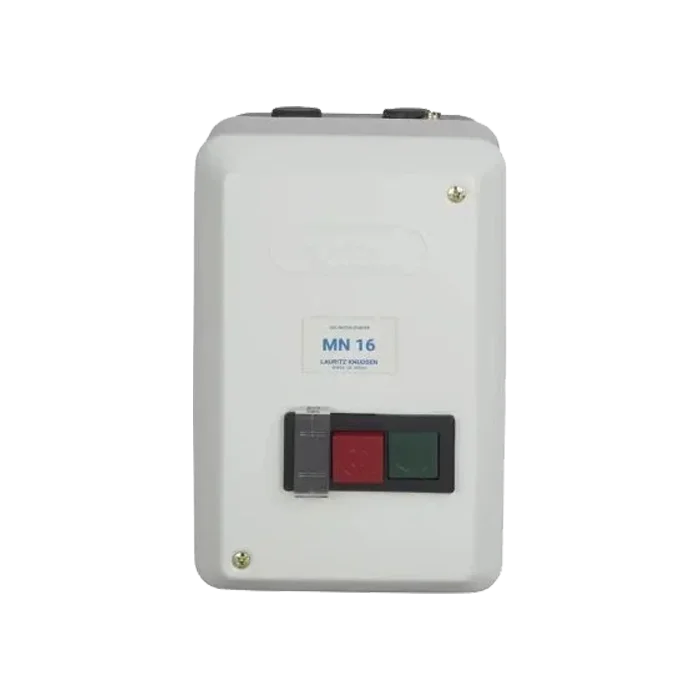
There is something dependable about equipment that has been used successfully for decades. Manufacturers continue producing DOL starters because industries continue buying them. DOL starter ranges from Lauritz Knudsen Electrical & Automation, which are examples of solutions designed for dependable motor control in industrial and agricultural environments.
No engineering solution is perfect. DOL starters offer several benefits. However, there are situations where alternative starting methods may be more suitable.
Among the most discussed disadvantages of DOL starter systems is the large current drawn during startup.
When full voltage is applied immediately, the motor may draw several times its rated current. In smaller installations, this may not cause problems. In larger systems, however, the high inrush current can cause a temporary voltage drop in the supply system, which may affect other connected equipment.
Imagine a heavily loaded conveyor suddenly receiving maximum torque. The immediate acceleration can place stress on shafts, couplings, belts, and bearings. Over time, repeated starts may contribute to increased mechanical wear.
For certain applications, softer starting methods can reduce these effects significantly.
Motor size plays an important role when selecting a starting method. As motors become larger, starting current increases accordingly. This is one reason why the disadvantages of DOL starter installations become more noticeable in high-capacity applications.
DOL starters are generally suitable for small to medium-sized motors (typically up to 5–10 HP, depending on supply conditions), beyond which starting current limitations become significant. Many facilities establish limits beyond which direct-on-line starting is not permitted.
Modern industries increasingly value flexibility. Variable speed operation can improve energy efficiency, process control, and overall system performance. Traditional DOL starters do not provide these capabilities.
They start the motor. They stop the motor. Beyond that, their functionality remains limited compared with more advanced motor control technologies.
Despite newer alternatives, DOL starters continue to be installed every day. Their suitability for many common applications keeps demand strong across industries.
DOL starters are most commonly used with three-phase induction motors connected to standard AC supply systems.
Agricultural operations often prioritise reliability and simplicity. Farmers need equipment that starts when required and can operate consistently throughout irrigation cycles. DOL starters meet those expectations while keeping installation and maintenance requirements manageable.
Municipal and industrial water systems frequently use motors that are well-suited for direct-on-line starting. Pumps operating within acceptable power limits can benefit from the straightforward operation and protection provided by DOL starters. It is a practical combination that continues to work well.
Air compressors, exhaust fans, and industrial blowers often operate under conditions where advanced motor control is unnecessary. For these applications, DOL starters provide dependable operation and effective motor protection without adding unnecessary complexity.
Workshops and manufacturing facilities rely on numerous small motors. Mixers, machine tools, conveyors, and processing equipment commonly fall within the operating range suitable for DOL starting. Lauritz Knudsen Electrical & Automation offers DOL starter series that support these applications while delivering robust performance across demanding environments.
Also Read: What is Star Delta Starter? Types, Application and Working
The DOL starter has remained relevant for generations because it solves a common industrial challenge in a straightforward way. It starts motors quickly, protects them from overload conditions (with additional devices required for short-circuit and fault protection), and does so without requiring complex control systems.
For industries seeking dependable motor control products, Lauritz Knudsen Electrical & Automation offers trusted DOL starters designed to support reliable operation across agricultural, commercial, and industrial environments.
Yes. DOL starters can be integrated with float switches and water level controllers for automatic pump operation.
Periodic inspection of contactors, terminals, overload relays, and wiring connections is generally recommended.
Extreme temperatures can influence component life and overload relay calibration, making proper enclosure selection important.
Yes, provided the enclosure rating is appropriate for the installation environment.
Service life depends on operating conditions, switching frequency, and maintenance practices, but quality starters often remain in operation for many years.

Rajesh R Shirodkar,
DGM-Corporate CommunicationRajesh Shirodkar is a seasoned marketing and business leader with over 20 years of experience in the automation and electrical industry, spanning marketing communications, sales, business development, and software solution selling. He has led successful brand transformation initiatives and high-impact marketing programs, including branding and account-based marketing campaigns, as well as industry events that drive visibility, engagement, and growth. With expertise in brand building, lead generation, solution selling, and sales enablement, Rajesh is known for translating technology and business offerings into compelling value propositions and delivering sustainable growth through strong stakeholder collaboration.
Assistance Required?
Select an option to Contact Us
 Contact Us

